

Some mobile games reward skill. Others? Not so much. These 20 mobile games lean heavily on RNG, where luck often matters more than actual strategy and tactics. It manifests in all sorts of ways, such as unpredictable loot drops and chance-based rewards, which makes it so hard to make meaningful progress, no matter how good you are at the game.

20. Clash Royale
Although there are very real elements of real-time strategy in Clash Royale, the game has a strong layer of randomness due to its card cycle system (which you can control if you run Cycle-style decks) and random reward system. A bad starting hand or awkward rotation can force suboptimal plays that can snowball into a loss. The reward system, which includes a variety of Lucky Drops, is very RNG-based, as the rewards you earn are entirely dependent on the drop box's rarity. On top of that, the rarity is no guarantee of a "good" reward, as each rarity level houses various amounts of resources/items.
(Image Credit: Supercell)

19. Guardian Tales
Guardian Tales is an action-packed RPG that mixes real-time combat with puzzle-solving, but its character and weapon acquisition systems are strongly tied to randomized pulls. Those who get lucky by getting high-tier heroes and equipment gain a significant advantage, while others who may not be so lucky struggle. This imbalance makes RNG a major factor in how well each player fares in the game.
(Image Credit: Kong Studios / Kakao Games)

18. AFK Arena
AFK Arena mixes idle mechanics with gacha-based hero collection, meaning your entire roster depends largely on luck. The strength of your teams and, ultimately, your ability to compete is heavily influenced by the heroes you can randomly obtain. Duplicate pulls, rarity tiers, and synergy options are all tied to RNG, which results in progression feeling rather uneven between players who don't spend money in the game and those who do.
(Image Credit: Lilith Games)

17. Raid: Shadow Legends
Raid: Shadow Legends is heavily built around collecting champions through randomized shard openings. High-tier characters are rare, and getting them can often dramatically improve your performance in all modes. Even acquiring gear involves random stats and upgrades, meaning you must rely on repeated attempts to build up and get optimal builds. Strategy exists in this fantasy RPG, but it’s often constrained by what luck provides.
(Image Credit: Plarium)

16. Archero
It's pretty well-known within the Archero community that each run's probability of success is dependent on the random upgrades that shape your character's build. Some combinations create powerful synergies, while others are weak or incompatible. This randomness means that success can depend heavily on the upgrades you get during a run. There's only so much strategic planning you can do if you don't get the right items.
(Image Credit: Habby)

15. Fate/Grand Order
Fate/Grand Order is infamous for its extremely low pull rates for top-tier characters. It's quite common for many players to spend large amounts of in-game currency and end up not obtaining the rewards they want. While the gameplay in the card battle RPG has strategic elements, the foundation of any player's success is often built on luck when it comes to summons.
(Image Credit: Aniplex)

14. Summoners War
Summoners War is, quite famously, notorious for its layered RNG systems. Not only are monsters obtained through random summons, but their effectiveness depends heavily on rune drops, which also have randomized stats. Even upgrading runes can fail to produce good results. We've played the game and, in our opinion, it can feel like a test of patience, persistence, and luck as much as it is a test of careful strategic planning.
(Image Credit: Com2uS)

13. Mario Kart Tour
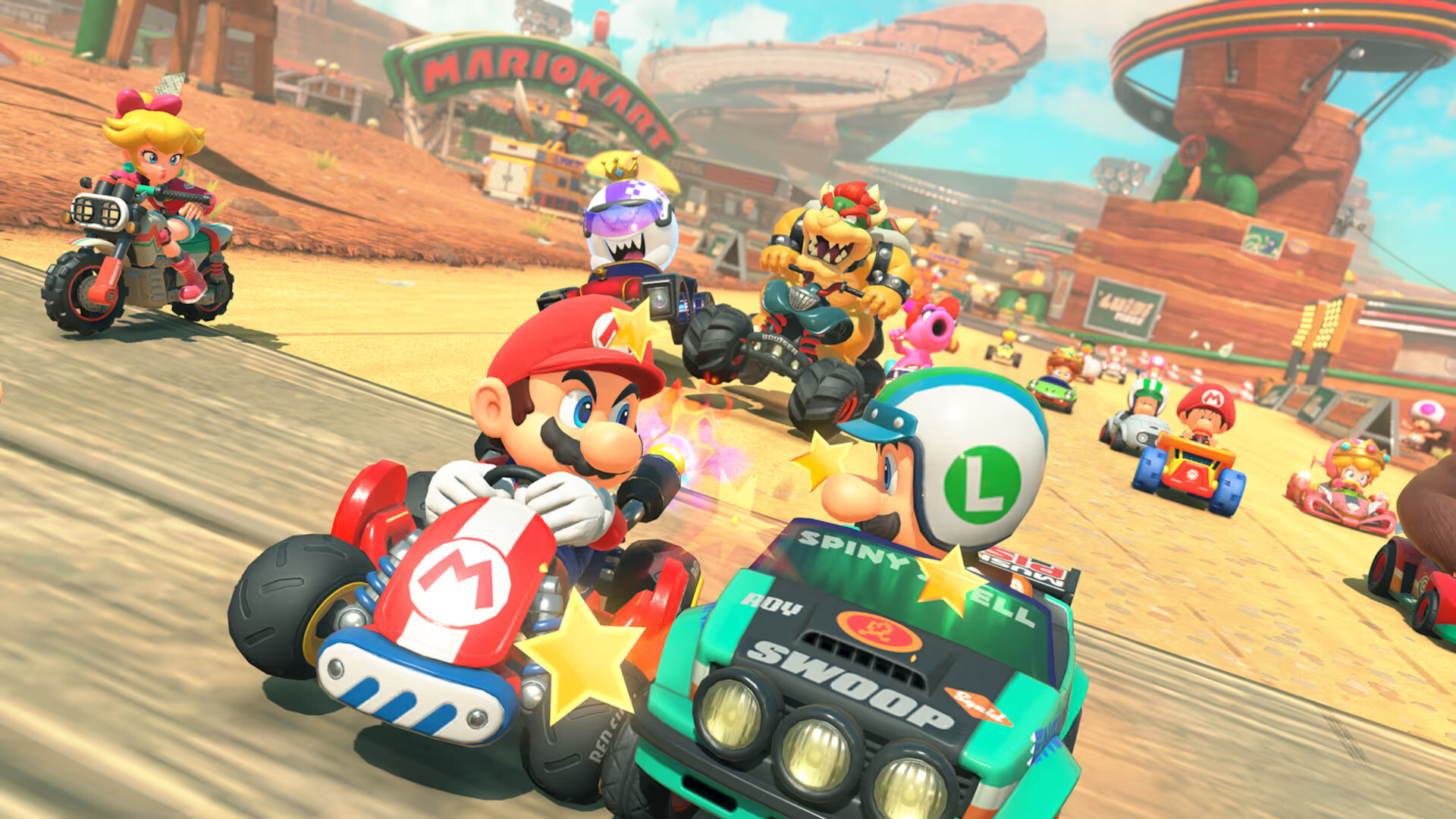
Mario Kart Tour, in classic true form, emphasizes chaotic racing where the outcome of any race can shift instantly. During a race, you can receive random yet game-changing items from boxes, which can range from helpful mushroom boosts to powerful red shells that can destroy the driver in front of you. The game itself has super-simple controls, which makes driving quite easy. The real challenge is dodging all the obstacles and items that come your way. If you've played this game before, then you'd know that it's not exactly unheard of to be constantly hit by a barrage of items that can see you drop from first place all the way to last.
(Image Credit: Nintendo)

12. Dragon Ball Z: Dokkan Battle
The bubble-popping puzzle gameplay in Dragon Ball Z: Dokkan Battle often relies on randomly generated ki orbs, which determine how effective your characters can attack. Combine this with the gacha-based character-collection system, and you'll be faced with two layers of randomness that can impact your team compositions and performances in battle.
(Image Credit: Bandai Namco Entertainment)

11. Fire Emblem Heroes
Although battles in Fire Emblem Heroes involve strategic decisions surrounding character positioning and tactics, the summoning banner system heavily influences which units you get to use. Naturally, rare heroes are extremely powerful, but obtaining them is very much RNG-based. That said, you can be the most skilled player in the entire game, but if you're unlucky with your pulls, then you probably don't have a great shot of being competitive.
(Image Credit: Intelligent Systems / Nintendo)

10. Plants vs. Zombies 2
Plants vs. Zombies 2 is a straightforward tower defense game whose core gameplay involves a solid amount of strategy. However, certain modes introduce an absurd amount of randomness in the plants you get, how devastating enemy waves can be, or the power-ups you receive. These luck-based elements combined can force you to adapt on the fly — which, you could argue, is a part of strategy — but the odds can be so stacked against you that the level is impossible to beat. Sometimes, a challenging level may feel easy on the second try simply because you had better luck, and that's why the game does feel more RNG-based than strategy-based at times.
(Image Credit: PopCap Games / Electronic Arts)

9. Top War: Battle Game
Top War: Battle Game combines merging mechanics with traditional strategy elements in its wave-clearing gameplay, but unit upgrades and rewards often rely on completely random drops. While you can try your best to optimize merges and attacks, the strength of your army is ultimately influenced by chance-based drops.
(Image Credit: RiverGame)

8. Dragon City
Dragon City is a game where you build a collection of dragons and design your very own city. However, a lot of the mechanics, such as chests and breeding outcomes, are often unpredictable due to the game's RNG-heavy system. You can attempt to combine specific dragons, yet the results frequently vary. Limited-time events and rewards also include random elements. As a result, the skill-based elements of the game sit in the backseat when they really should be in the driver's seat.
(Image Credit: Socialpoint)

7. Candy Crush Saga
Candy Crush Saga may look purely skill-based, but the random generation of candies in each of the over 20,000 levels means that some levels are inherently easier than others. You may find yourself failing multiple times on a single level due to unlucky layouts or drops, then suddenly succeed when the item generation is on your side. It doesn't help that the game uses a "Lives" system, so it's extra infuriating when you lose simply because the odds weren't in your favor.
(Image Credit: King)

6. Dice Dreams
As the name of the game suggests, Dice Dreams largely revolves around rolling dice to make a play, collect coins, or expand your board. Since dice rolls are inherently random, your progression in the game is very much dependent on luck, and there isn't a lot of room for strategic influence. We understand that that's the whole idea of the game, but there's a certain point where you just ask yourself if playing a game whose gameplay is overwhelmingly based on chance is a game worth playing at all.
(Image Credit: SuperPlay)

5. Marvel Contest of Champions
Marvel Contest of Champions is a fighting game that blends skill-based combat with RNG-driven character collection and upgrade systems. Basically, you collect characters through gacha-based Crystals, which, in effect, are loot boxes. Rare characters offer clear advantages, but they are hard to get since the drop rates are exceptionally low. Even materials are randomized, meaning that grinding doesn’t always mean you make it further into the game.
(Image Credit: Kabam / Marvel)

4. Cookie Run: Kingdom
In Cookie Run: Kingdom, you build teams of Cookies that you obtain through gacha draws. Like other strategy RPGs, the rarity and synergy of these Cookies can drastically affect combat performance. While there is some tactical depth in team-building, the randomness of acquiring top-tier units often determines how competitive someone can be. Those who end up spending money in the game tend to have better rosters.
(Image Credit: Devsisters)

3. Hearthstone
Hearthstone is one of the most famous examples of RNG-heavy design in a competitive game. Many cards feature random effects — generating random spells, targeting enemies unpredictably, or producing outcomes that have a wide range of variance. In fact, there are many decks out there that are built around randomness, meaning that even your best play can be undone by an unlucky sequence of effects. While skill still matters in Hearthstone, chance is a factor that even Blizzard doesn't try to hide in the game's many mechanics. It can be charming at first, but if you've been on the receiving end of some unlucky outcomes, then you might find it intolerable.
(Image Credit: Blizzard Entertainment)

2. Coin Master
Coin Master is almost entirely driven by slot machine mechanics. You spin to earn coins, shields, or attacks, and progression depends on what these pulls randomly provide. There’s very little meaningful decision-making beyond when to spin or save resources, making it one of the clearest examples of RNG dominating the overall gameplay. The gameplay is very intentionally built around unpredictability, so as to keep their players engaged.
(Image Credit: Moon Active)

1. Genshin Impact
Genshin Impact features a decent amount of skill-based combat and team-based synergy, but its progression system is deeply tied to RNG through its "wish" gacha system. In it, you'll spend resources for a chance to obtain characters and weapons, with there being rather low probabilities for top-tier items. Daily artifact farming also involves several layers of randomness that range from set drops to stat rolls. As a whole, optimizing your characters and roster feels more like a luck-dependent process.
(Image Credit: HoYoverse)
Some mobile games reward skill. Others? Not so much. These 20 mobile games lean heavily on RNG, where luck often matters more than actual strategy and tactics. It manifests in all sorts of ways, such as unpredictable loot drops and chance-based rewards, which makes it so hard to make meaningful progress, no matter how good you are at the game.